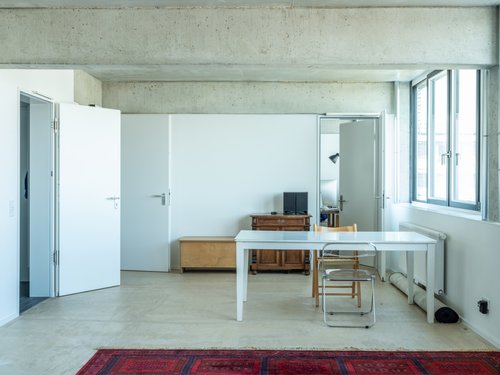
Nucleus living (Nukleuswohnen) is a new, flexible form of housing designed to allow flats to grow and shrink without the need for conversion. Invented and developed by some of the founders of Kooperative Großstadt eG in Munich as part of their programmatic work, it was first used in the young cooperative's first project, San Riemo.
This article was also published under the German title „Nukleuswohnen – Grundlagen, Erfahrungen, Ausblicke oder San Riemo und die Folgen”. For the German version see: Fischer, F., Wagner, Y., & Almannai, R. (2025). Nukleuswohnen: Grundlagen Erfahrungen Ausblicke oder San Riemo und die Folgen. In D. Bayer, J. Graf, B. Lenherr, B. Milla, & E. Stricker (Hrsg.), Wege zur Bauwende: Klima- und ressourcenschonend konstruieren (1. Auflage). Triest Verlag. This version was translated into English and graphically revised for wohnbau.site.
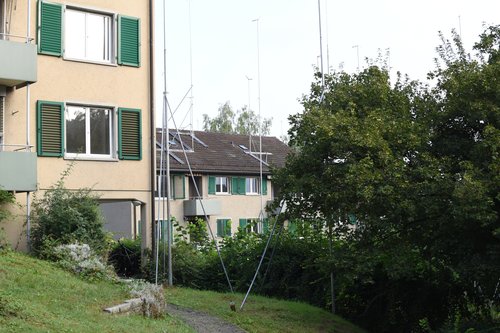
The concept of "Nucleus Living" aims to maximize the efficiency of residential construction by eliminating both unused and missing spaces, thereby achieving a high level of housing sufficiency. Given the latent, underutilized space reserves within existing housing stock, integrating nucleus living into these structures appears to be a logical solution. This paper examines four representative buildings from three distinct periods, presenting an overview of the types and scales of the necessary transformations in a schematic manner. Concurrently, three fundamental structural transformation strategies are introduced and implemented. These strategies adhere to the principle of minimizing structural intervention in the existing buildings. The common thread linking these strategies is the creation of corridors within the existing structures.
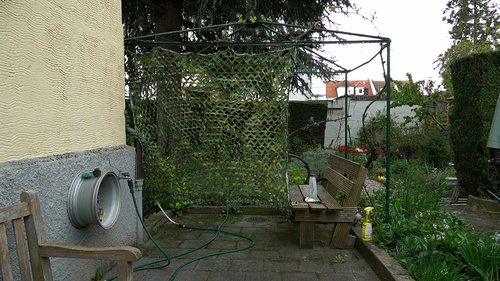
This article examines the potential of alternative bathroom configurations that extend beyond the confines of the individual dwelling. While contemporary residential construction is characterized by the formation of standardized bathroom types shaped by technical and normative requirements, film-based bathroom portraits from the user’s perspective document a diverse range of bathing practices. These range from private bathrooms located outside the individual dwelling and improvised substitute bathrooms to shared sanitary facilities at campsites and fragmented bathroom arrangements in student residences. The article explores a range of design possibilities that foreground flexibility, communal use, and individual suitability in residential construction. Variations in privacy, the potential for parallel use, and the spatial decoupling of bathroom and apartment point to a design potential that has so far remained largely untapped. The article argues for a broader spectrum of bathroom configurations that accommodate different lifestyles, comfort expectations, and forms of cohabitation, while also creating opportunities for shared use and community.